
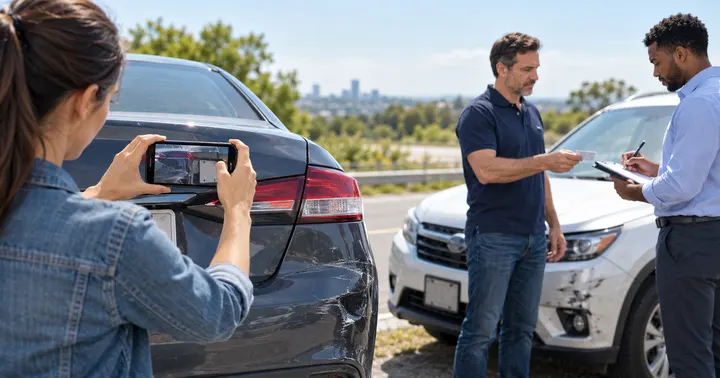
After an accident, important details can quickly become difficult to remember or locate. If it is safe to do so, collecting information about the people involved, vehicles, insurance, location, witnesses, damage, and responding agencies can help you maintain an accurate record of what happened.
You do not need to investigate the accident yourself or decide who was legally responsible. Your immediate priorities should be safety and medical attention when needed. Once those needs are addressed, focus on preserving factual information that may be useful later.
What Information Should You Collect at the Accident Scene?
The information available will depend on the circumstances of the accident. If you can safely do so, consider collecting the following.
1. Information About the Other Driver
Record basic identifying information for the other driver or drivers involved, including:
- Full name
- Address
- Telephone number
- Driver’s license information, when available
- Vehicle owner’s name if different from the driver
- Vehicle registration information
Under Florida Statute §316.062, a driver involved in a crash involving injury, death, or damage to an attended vehicle or other property must provide certain identifying information, including the driver’s name, address, and vehicle registration number. A driver’s license or permit must also be shown upon request when available.
Rather than relying only on handwritten notes, you may consider taking a clear photograph of information appropriately provided by the other driver.
2. Vehicle Information
Record information about every vehicle involved in the accident.
Useful details may include:
- Make
- Model
- Color
- License plate number
- State of registration
- Name of the vehicle owner
- Visible areas of damage
Take clear photographs of each vehicle when it is safe to do so.
Try to capture both the overall vehicle and closer views of damaged areas.
3. Insurance Information
Ask for the other driver’s available insurance information.
Consider recording:
- Insurance company name
- Policyholder’s name
- Policy number, when available
- Insurance contact information
For Florida crashes subject to the applicable reporting requirements, law enforcement officers instruct involved drivers to exchange the vehicle owner’s and driver’s name and address, the vehicle’s license number, and the name of the vehicle’s liability insurance carrier.
Do not assume that someone is uninsured simply because they cannot immediately locate an insurance card.
4. Photos and Videos of the Accident Scene
If conditions are safe, photographs and videos can help preserve how the scene appeared before vehicles are moved, debris is cleared, or other conditions change.
Consider documenting:
- All vehicles involved
- Damage to each vehicle
- License plates
- Vehicle positions
- Surrounding roadway
- Intersections
- Lane markings
- Traffic signals
- Stop signs
- Road signs
- Skid marks
- Debris
- Guardrails or barriers
- Nearby property damage
- Road conditions
- Weather conditions
Take a combination of wider photographs showing the overall scene and closer photographs showing specific details.
Never stand in moving traffic or another dangerous location simply to obtain a photograph.
5. The Exact Accident Location
Record where the accident happened as precisely as reasonably possible.
Useful details may include:
- Street name
- Cross street
- Highway or interstate
- Exit number
- Direction of travel
- Nearby landmark
- City
- County
For example, recording the specific intersection or highway exit may be more useful than simply writing the name of the city.
Florida crash-report forms include the date, time, and location of the crash, making accurate location details useful to preserve.
6. Date and Time
Record:
- Date of the accident
- Approximate time of the accident
- Time emergency services arrived, if known
- Time you left the scene, if relevant
Photos taken with a smartphone may contain timestamps, but keeping a separate written record can still be helpful.
7. Witness Information
If someone witnessed the accident, consider asking for their:
- Full name
- Telephone number
- Email address
You may also want to note where the witness was located when the accident occurred.
Do not pressure witnesses to assign fault or give a particular version of events. The goal is simply to preserve their contact information and what they independently observed.
8. Police or Law-Enforcement Information
If law enforcement responds to the accident, consider recording:
- Name of the responding agency
- Officer’s name
- Badge or identification number, if provided
- Case number
- Crash-report number
- Instructions for obtaining the crash report
The agency that responds may depend on exactly where the accident occurred.
Keeping the case or report number can make obtaining documentation later much easier.
9. Information About Injuries
If anyone needs emergency medical attention, obtaining help should take priority over collecting information.
After your immediate medical needs are addressed, consider keeping a factual record of:
- Where you experienced pain or discomfort
- When symptoms began
- Whether emergency medical personnel evaluated you
- Whether you visited an emergency room, urgent care center, physician, or other healthcare provider
- Dates of treatment
Some symptoms may become noticeable after leaving the accident scene.
You do not need to diagnose an injury yourself. Medical symptoms and treatment questions should be discussed with an appropriate healthcare professional.
10. Medical Treatment Records
If you receive medical treatment after the accident, keep relevant documents together.
These may include:
- Healthcare-provider names
- Appointment dates
- Hospital or clinic information
- Medical bills
- Receipts
- Prescription information
- Discharge instructions
- Referral information
- Physical therapy or rehabilitation records
Keeping these materials organized can help you maintain an accurate record of accident-related treatment.
11. Vehicle Damage and Repair Records
Keep documents connected with damage to your vehicle.
These may include:
- Repair estimates
- Final repair invoices
- Towing receipts
- Storage charges
- Rental-vehicle records
- Vehicle inspection documents
- Communications with repair facilities
- Photographs taken before repairs
- Photographs taken after repairs
Whenever practical, preserve photographs of the vehicle before repair work begins.
12. Insurance Communications
Accident-related insurance conversations can occur over several days or weeks.
Consider maintaining a simple communication log containing:
- Insurance company
- Claim number
- Adjuster’s name
- Telephone number
- Email address
- Date of each conversation
- Documents requested
- Documents submitted
- Written correspondence received
Keeping these details in one place can reduce confusion later.
If you receive a document, release, recorded-statement request, or settlement-related communication that you do not understand, consider obtaining appropriate guidance before making a decision.
13. Work-Related Records
If the accident affects your ability to work, preserve relevant records.
Examples may include:
- Dates of missed work
- Work schedules
- Employer communications
- Pay records
- Documentation concerning changes to your duties or schedule
Focus on preserving factual records rather than trying to calculate potential losses at the scene or immediately afterward.
14. Your Own Notes About What Happened
When you are able, consider writing down what you remember about the accident while the details are still relatively fresh.
Your notes may include:
- Where you were traveling
- Your direction of travel
- What happened immediately before the collision
- What you personally observed
- Traffic conditions
- Weather conditions
- Conversations at the scene
- What happened immediately after the collision
Stick to what you remember and observed.
Avoid guessing about events you did not see or facts you do not know.
What Information Should You Avoid Sharing Publicly?
Collecting accident information does not mean that every detail should be posted online or shared publicly.
Use caution with information such as:
- Medical records
- Driver’s-license information
- Home addresses
- Telephone numbers
- Insurance documents
- Detailed medical information
- Private communications
- Other people’s personal information
Store important accident records in a secure location and share sensitive information only when appropriate.
Should You Keep Original Photos and Documents?
Whenever practical, preserve the original versions of accident-related materials.
These may include:
- Photos
- Videos
- Emails
- Text messages
- Crash-related documents
- Insurance correspondence
- Medical documents
- Repair documents
Avoid unnecessarily editing or altering original files.
You may also want to maintain a secure backup of important digital records.
What if You Cannot Collect Everything at the Scene?
Safety comes first.
You may not be able to collect every detail immediately, especially when:
- Someone is injured
- Emergency responders are working
- Traffic creates a dangerous environment
- Your vehicle must be moved
- You are transported for medical treatment
Collect only what you reasonably can without putting yourself or someone else at risk or interfering with emergency personnel.
Some information may later be available through a crash report, insurance records, witnesses, photographs, or other documentation.
What Information May Appear in a Florida Crash Report?
Florida’s approved crash-report forms are designed to collect detailed information about the circumstances of a collision.
Under Florida Statute §316.068, written crash reports include information such as:
- Date, time, and location
- Description of vehicles involved
- Names and addresses of involved parties
- Liability-insurance information
- Additional information required by the approved crash-report form
A crash report can therefore become an important part of your accident records.
However, it does not replace other information you may collect yourself, such as photographs, medical documents, repair receipts, witness contact information, and insurance correspondence.
Accident Information Checklist
If it is safe and practical, use this checklist to help organize the information you collect.
People
- Driver names
- Contact information
- Vehicle-owner information
- Witness names
- Witness contact information
Vehicles
- Make and model
- License plate
- Registration information
- Vehicle-owner information
- Damage photographs
Insurance
- Insurance carrier
- Policyholder
- Policy information when available
Accident Scene
- Photos and videos
- Street or intersection
- Direction of travel
- Road conditions
- Signs and signals
- Date and time
Law Enforcement
- Responding agency
- Officer information
- Case number
- Crash-report number
After the Accident
- Crash report
- Medical records
- Medical bills
- Repair estimates
- Repair invoices
- Towing receipts
- Rental-vehicle records
- Insurance communications
- Work-related records
- Your factual notes about what happened
You do not need to complete every item if doing so would interfere with your safety or medical needs.
Why Is Keeping Accident Information Organized Important?
An accident may generate records from several different sources, including law enforcement, healthcare providers, insurance companies, repair facilities, employers, and witnesses.
Keeping those materials organized can make it easier to:
- Find information when you need it
- Locate the crash report
- Respond to legitimate documentation requests
- Keep track of medical treatment
- Review accident-related expenses
- Communicate accurately about what occurred
- Provide relevant information if you later request a case review
A dedicated digital folder, physical file, or combination of both may help prevent important records from becoming scattered.
What if You Were Injured in a Car Accident?
If the accident involved a car and you want more information about common post-accident issues, visit our Car Accidents page.
For accidents occurring within one of the areas currently served by InjuryCaseDirect, you can also explore the relevant Florida location for additional local information.
What Happens if You Want Your Accident Information Reviewed?
If you were injured and would like to request an initial review of your situation, InjuryCaseDirect provides an online case-evaluation process.
The evaluation may ask for basic information such as:
- Accident type
- Accident date
- Accident location
- Injury information
- Treatment information
- Basic incident details
- A brief description of what happened
- Your contact information
Do not submit unnecessary sensitive information such as Social Security numbers, banking information, full driver’s-license numbers, medical portal credentials, or unrelated personal records.
How InjuryCaseDirect Works
1. Tell Us What Happened
Complete a short online case evaluation with basic information about the accident.
2. Verify Your Information
An intake representative may contact you to confirm your information and contact request.
3. Connect With a Participating Law Firm
With your consent, your information may be provided to a participating personal injury law firm.
4. The Law Firm Reviews Your Matter
The participating law firm independently determines whether it can assist you.
Submitting information does not mean that InjuryCaseDirect or a participating law firm has accepted your matter.
Learn more about the process on our How It Works page.
Frequently Asked Questions
Should I photograph the other driver’s insurance information?
If the other driver appropriately provides insurance information, taking a clear photograph may help you record it accurately. Check that the information is readable before leaving the scene.
Should I collect witness information?
If witnesses are available, their contact information may be useful because they may have independently observed what happened.
Should I photograph minor vehicle damage?
If it is safe to do so, consider documenting all visible vehicle damage, including damage that initially appears minor. The condition of the vehicle may change after it is moved or repaired.
What if I forgot to collect the other driver’s information?
Do not assume that the information is permanently unavailable. Depending on the circumstances, some details may later appear in the crash report, insurance records, law-enforcement documentation, photographs, or other records.
Should I keep medical bills even if insurance pays some of them?
Keeping copies of accident-related bills and treatment records can help you maintain a more complete record of medical care associated with the accident.
Should I save accident-related emails and text messages?
Consider preserving relevant communications involving the accident, insurance claim, repairs, treatment, or other important matters. When possible, retain the original communications as well as any backup copies.
Do I need to decide who was at fault at the accident scene?
No. Focus on safety, medical needs, and preserving factual information. Legal responsibility can depend on facts and circumstances that may not be apparent immediately after an accident.
Request a Free Case Review
If you were injured in an accident and would like to request an initial review, you can submit information through InjuryCaseDirect.
Start Your Free Case Review
It is free to submit, and there is no obligation to hire a participating law firm.
Submitting a case evaluation does not guarantee that a participating law firm will accept your matter.
Important Disclosure
InjuryCaseDirect is a legal marketing service and is not a law firm. InjuryCaseDirect does not provide legal advice or legal representation. Information submitted through this website may be shared with participating attorneys or law firms for the purpose of responding to your request.
Submitting information does not create an attorney-client relationship and does not guarantee that a law firm will accept your matter or that compensation will be recovered.
This article is provided for general informational purposes only and is not individualized legal advice. Laws, procedures, and requirements may change. Legal content should be reviewed by qualified Florida counsel before publication.